
Beautician Kit List for Beautician Course in Hyderabad Kukatpally: Complete Guide for Beginners and Students
Enroll for Beautician Course
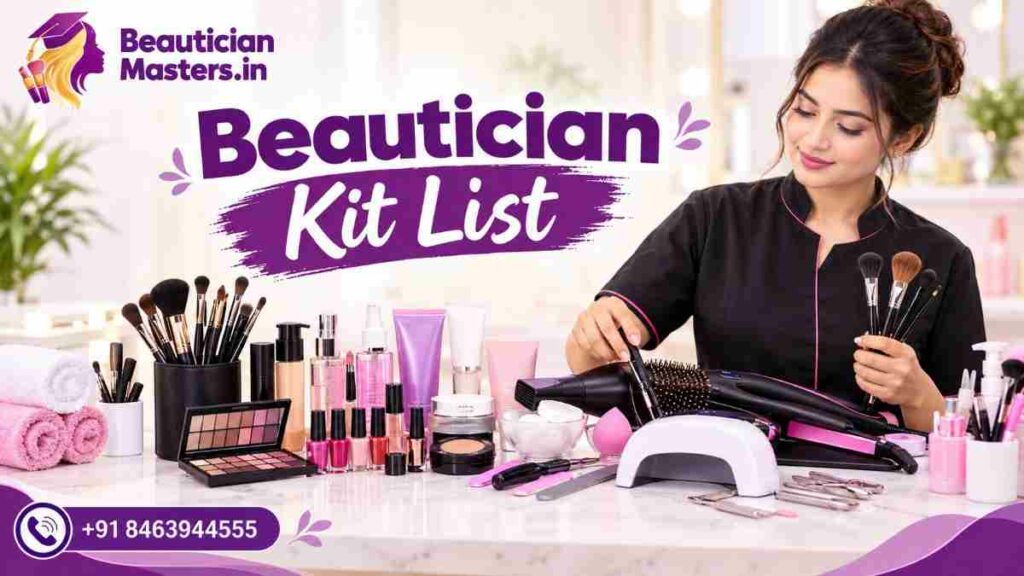
A beautician kit is a set of tools, cosmetics, skincare products and hygiene supplies used for facials, makeup, hair, nail care and hair removal. Beginners need cleansers, cotton pads, brushes, combs, nail files, disposable applicators and sanitizing supplies. Contents vary with the course syllabus, services offered, budget and experience, so students should request the institute's checklist before buying."What do I need to buy before my first class?" This is one of the first questions beginners ask when starting their beauty training. This beautician kit list answers it with one rule: buy essentials first, and add the rest as your skills grow. Items are marked Essential, Optional or Later.This guide is designed for students enrolling in a beautician course at Kukatpally, Hyderabad, as well as aspiring home-service professionals and experienced beauticians. Your kit touches skin, hair and nails, so quality, skin compatibility and cleanliness matter as much as the tools themselves. A student kit is built for learning and practice. A professional kit is built for daily client work. Choose by your training, budget and goals, not by how many pieces a bundle contains.
What Is a Beautician Kit?
A beautician kit is the collection of tools, products and accessories used to deliver beauty services: facials and skincare, makeup, hair styling, manicures and pedicures, hair removal and grooming.No single kit fits everyone. Contents depend on your course syllabus and the services you plan to offer. If you are still choosing a programme, compare the types of beautician courses in Hyderabad first, because the course decides the kit.
Complete Beautician Kit List for Beginners and Students
Professional Beautician Kit List for Salon Use
A professional beautician kit for salon use adds only what daily client work demands: professional-grade makeup tools, facial equipment where your training covers it, skin-prep products, extra styling accessories, a wider nail tool range, client draping, and organized trolleys or lockable cases.Compared with a beginner kit, it differs in durability (tools survive repeated cleaning), product range (more shades and skin options), documented hygiene routines, and specialization such as bridal or advanced skincare.
Makeup Kit List for Beauticians
Choose makeup by skin tone, skin type and occasion rather than by brand. For foundation and concealer, match undertones across a range of Indian skin tones, and consider dry, oily, combination and sensitive skin separately.Everyday looks: light, natural formulas and a compact shade range are enough.Party looks: add richer eye colours, contour and highlight.Bridal looks: add long-wear base products, setting spray and wider shade depth. A dedicated bridal makeup course teaches how to select these for different skin types.Beginners do not need every professional product at once. Learn to colour-match and blend with a compact set, then add specialty items as clients ask for them.
Facial and Skincare Kit List
Select skincare products by the service, the client's skin, and the manufacturer's directions. No product suits every skin type, so ask about allergies and sensitivities first and patch test where advised. Reactions to cosmetics most often appear as itchy, red rashes, which is why ingredient lists matter; the US FDA explains this in its guidance on allergens in cosmetics. Keep facials gentle: avoid aggressive treatments unless you are trained and supervised, and never make medical claims. Learners who want deeper skin analysis can look at a cosmetology and skin treatment course.
Hair Care and Styling Kit List
Hair tools are the area where beginners overspend most. Learn sectioning, blow-drying and curling on practice material before using heat tools on a client, and always apply a heat protectant. Never leave heated tools unattended or place them on surfaces that can burn. When buying a dryer, check the Indian safety standard: the Bureau of Indian Standards lists IS 7154 for mains-operated electric hair dryers, and a BIS mark on the product is a useful check. If hair is your focus, an advanced hair stylist course shows which professional tools are worth buying and when.
Nail Care Kit List for Beauticians
Basic manicure and pedicure kits cover shaping, buffing and polish. Cuticle tools should be used only as trained, since careless cutting can injure skin. Advanced services such as gel or acrylic extensions need extra training and specialized equipment, so leave them off your starter list.
Waxing, Threading, and Hair Removal Kit
Hair removal carries more risk than most services because of heat and skin contact. Check wax temperature, skin suitability and product directions every time. Never re-dip a used spatula into the wax pot, because that contaminates the product. Practise threading before offering it to clients, and buy waxing supplies only when your course reaches that module.
Beautician Kit Price in India
Beautician Kit by Budget and Skill Level
How to Choose the Best Beautician Kit
Hygiene and Safety Essentials for a Beautician Kit
This is the only in-depth hygiene section in this guide. Hygiene protects clients and you, because cross-contamination can spread infection.Cleaning removes visible dirt and product with soap and water. Disinfection reduces most germs using a suitable disinfectant. Sterilization destroys all microbial life and applies to instruments that break the skin. The right method depends on the tool, its use and local requirements. For detailed methods, see the CDC disinfection and sterilization guideline, which is written for healthcare settings, so adapt it to salon use under local rules.Use single-use applicators wherever possible and never reuse disposables.Sanitize or wash hands before and after every client, as in the WHO Clean Your Hands campaign.Use fresh towels and linens for each client.Follow disinfectant instructions, including contact time.Wear gloves and other protective equipment suited to the service.Inspect electrical tools and cords before use, keep them dry and unplug after use.
How to Maintain and Organize Your Beautician Kit
Beautician Kit List for Courses in Hyderabad Kukatpally
Common Mistakes to Avoid When Buying a Beautician Kit
How to Start Your Beauty Career with the Right Beautician Kit
A kit supports training; it does not replace it. Learn the basics before expanding, practise under supervision, and build a portfolio only with the consent of models and clients. Choose a specialization, then invest as your skills and services grow, whether you aim for salon work or independent services. No kit alone guarantees a job, income or business success. To see how India defines the role, read the Beauty Therapist qualification file on the National Qualification Register, prepared by the Beauty & Wellness Sector Skill Council. For more guidance, browse the Beautician Masters blog.
Key Takeaways
Longer beautician courses generally cost more because they involve extended training hours, detailed modules, and more practical sessions. Short-term courses focus on basic skills, while long-term programs cover complete professional training, which naturally increases the beautician course cost.
Conclusion
A good beautician kit list is a plan, not a shopping spree. Check your syllabus, write your own checklist from Table 1, compare prices, and buy essentials before optional items.Ready to start? Build your beautician kit list today, confirm it with your institute, and begin practising with the right tools and safe working habits. To see syllabus and batch details for the Beautician Course in Hyderabad Kukatpally, visit Beautician Masters or contact the team.
FAQ
1. What items are included in a basic beautician kit list?
Typically cleansers, cotton pads, facial sponges, brushes, a starter makeup set, combs, clips, nail files and sanitizing supplies. Your syllabus decides the final list.
2. What is the minimum beautician kit required for beginners?
Hygiene supplies, a cleanser, cotton pads, a few brushes, combs, clips, nail files and a pouch. Wait on heat tools, wax and bridal products until a module requires them.
3. How much does a beautician kit cost in India?
It depends on brand, quantity and specialization, and a student kit costs far less than a salon or bridal kit. Check current retailer listings and your institute's inclusions before buying.
4. What should a beautician kit contain for a beauty course?
Whatever the institute lists in writing, usually skincare basics, brushes, a starter makeup set, nail tools and hygiene items. Ask for the list before enrolling to avoid duplicates.
5. Which makeup products are essential for a beginner beautician?
Foundation and concealer in suitable shades, powder, blush, an eyeshadow set, eyeliner, mascara, brow and lip products, and brushes. Contour, highlight and primer can wait.
6. What is included in a professional beautician kit?
Durable tools, a wider shade and product range, client draping, organized storage and documented hygiene supplies, plus facial or styling equipment if you offer those services.
7. Is a beautician kit provided by beauty training institutes?
It varies. Some institutes include a kit, some share products, and others ask students to buy. Get the details in writing before you pay.
8. Which tools are required for facial and skincare services?
Cleanser, remover, moisturizer, masks, sponges, bowls, spatulas, headbands, clean towels, tissues and gloves, chosen to suit each client's skin and the product directions.
9. How can I maintain hygiene in my beautician kit?
Separate clean and used tools, clean and disinfect reusable items by material and use, choose single-use applicators, sanitize hands and discard expired products. Follow product labels and local rules.
10. Which beautician kit is suitable for students in Hyderabad Kukatpally?
The one your chosen institute specifies. Start with the Essential items in Table 1, confirm the kit list with your institute in writing before buying, and add Optional items only when a module needs them.
Related articles

Beautician Course Details
Learn More
Types of Beautician Courses in Hyderabad
Learn More